
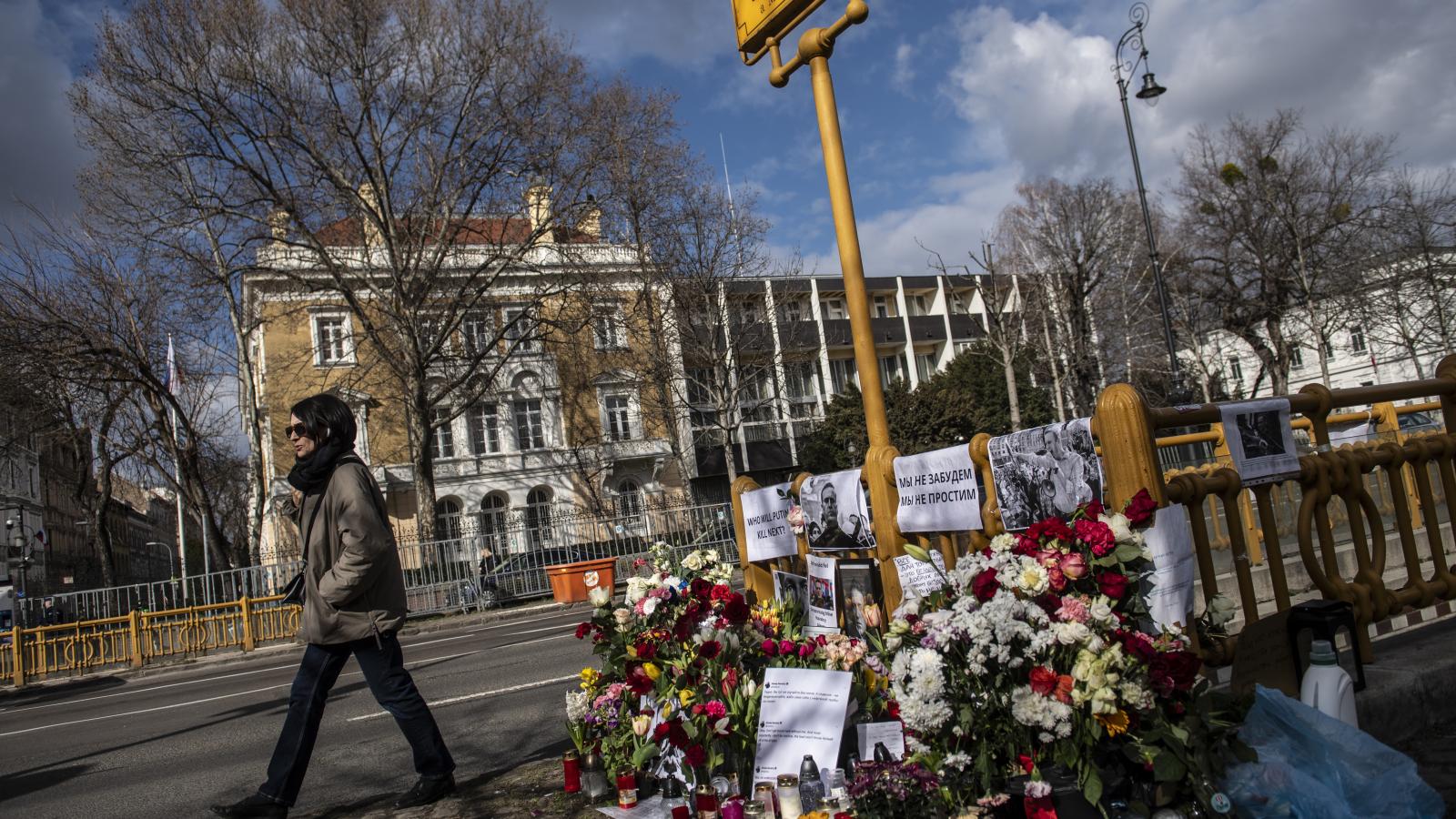
On 8 September 2026, the Hungarian government announced that ten members of Russia’s diplomatic mission in Budapest had been ordered to leave the country. According to Foreign Minister Anita Orbán, the Hungarian authorities assessed that those concerned had engaged in activities unacceptable for diplomats; she justified the decision by the need to protect Hungary’s security and sovereignty. Prime Minister Péter Magyar likewise emphasised the protection of sovereignty. At the same time, the government intends to maintain the necessary diplomatic dialogue with Moscow. The names, positions and specific activities of those concerned have not yet been made public.
Expelling ten diplomats is significant. Declaring one or two diplomats persona non grata is a customary political signal, but removing ten members of a diplomatic mission at once can already noticeably restrict an embassy’s operational – and intelligence – capacity. Although it cannot be stated that all those expelled were intelligence officers, the number involved and the official justification make it highly likely that this was a significant counter-intelligence measure.
The preceding developments also point in this direction. In May 2026, Hungary had already expelled Artur Sushkov, third secretary at the Russian Embassy in Budapest, who, according to media reports, had been identified as an SVR officer working under diplomatic cover. An investigative report published in April found intelligence or security-service links involving at least 15 members of the 47-strong Russian diplomatic staff in Budapest and considered such links likely in another six cases. We do not know which of them, if any, are on the current list, but the data suggest that a significant Russian intelligence presence may have been operating in Budapest under diplomatic cover.
The regional context. Following the 2022 Russian invasion of Ukraine, numerous European states expelled large numbers of Russian diplomats linked to intelligence activities. Hungary largely remained outside this process: Budapest had not carried out any publicly announced expulsion of diplomats since 2018. The current measure can therefore also be interpreted as ending the Hungarian ‘Sonderweg’.
Its significance for Hungary’s relations with its allies may be at least as great as its direct counter-intelligence impact. Intelligence cooperation among NATO and EU member states is based on partners adequately protecting shared sensitive information and taking action against the activities of foreign intelligence services. The European Commission expressed its support for Hungary and placed the decision in the context of Russia’s sustained hybrid campaign against the EU. The expulsions therefore also signal to Hungary’s allies that Budapest regards Russian intelligence and influence activities as a national security risk. In this sense, the measure is a concrete, politically costly element in restoring Hungary’s credibility among its allies.
Moscow’s sharp reaction. The Russian Foreign Ministry promised a ‘tough and painful’ response, while Yevgeny Stanislavov, Russia’s ambassador to Budapest, described the decision as an unprecedented and unjustified escalation. Diplomatic reciprocity is the most likely response, although political, economic or information pressure cannot be ruled out. It is particularly likely that Moscow will seek to portray the change in Hungarian foreign policy not as an independent decision by Budapest, but as the result of pressure from Brussels or Washington.
Expected consequences. The expulsions, however, will not end Russian intelligence activity in Hungary. European experience suggests that Moscow may respond to restrictions on diplomatic cover by making greater use of operatives without official cover, local intermediaries, actors operating from third countries and expendable agents. The counter-intelligence challenge may therefore change: less visible networks could come to the fore instead of more easily identifiable diplomats.
These steps also set new rules for Hungarian–Russian relations. The emerging model may not be about severing relations but about normalising them: dialogue and pragmatic cooperation, where justified by Hungarian interests, while ending the previous tolerance of Russian intelligence and influence activities. The expulsions can therefore be interpreted not as an isolated diplomatic incident, but as one of the first concrete steps in implementing the adjustment of Hungary’s Russia and security policy that began in August 2026.
9 September 2026